

The QA Design Review Engine
Co-designing automated workflows to protect creative bandwidth and scale design standards.
The Cost of Velocity at Tiller
In a fast-moving digital agency environment, speed to delivery is crucial—but consistency is the real test. At Tiller, our multidisciplinary design team operates across complex web architectures, enterprise B2B SaaS platforms, and multi-channel brand deliverables. However, as project throughput increased, we ran directly into a familiar agency bottleneck: the inconsistency of ad-hoc quality assurance.
Design QA historically relied on each designer’s individual mental checklist. Without a standardized pre-flight review before client delivery, recurring and unpredictable errors inevitably surfaced during final stages: unlinked brand variables, inconsistent type scales, uneven layout padding, broken links, or subtle copy disconnects between approved wireframes and production canvases. These preventable issues triggered last-minute scrambles, delayed client approvals, and drained creative momentum. I realized that to protect our team's creative standards and client trust, we needed to stop relying on manual file policing and engineer an automated, shared baseline directly inside our primary workspace.
Building the QA Review Engine
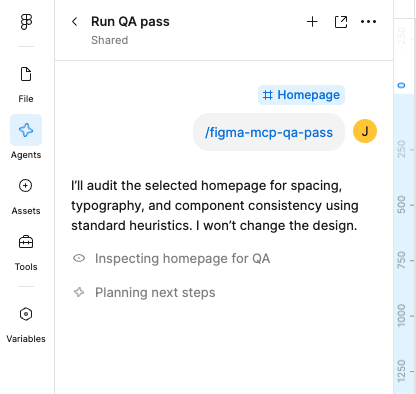
Rather than mandating a top-down, bureaucratic checklist that lived on a static Notion page, we treated delivery quality as an operational product co-designed by the team who uses it every day. We pushed the core initiative through a Delivery Improvement submission, building the initial logic for a dedicated Figma skill.
We anchored the solution across a three-part operational architecture:
Figma Agent & Custom Skill (The Engine): A native inspection tool created directly inside Tiller’s Figma workspace that scans canvases for layout, token, and content compliance before work leaves the designer’s desk.
Notion SOPs (The Guardrails): Clear standard operating procedures defining exactly when and how the automated pre-flight review runs prior to internal Art Director reviews and client presentations.
The Creative Team Field Guide (The Foundation): A centralized operational framework developed in collaboration with senior leadership, institutionalizing automated QA into our broader agency culture and onboarding rhythms.
Moving from Manual Checking to Automated Pre-Flight
❋
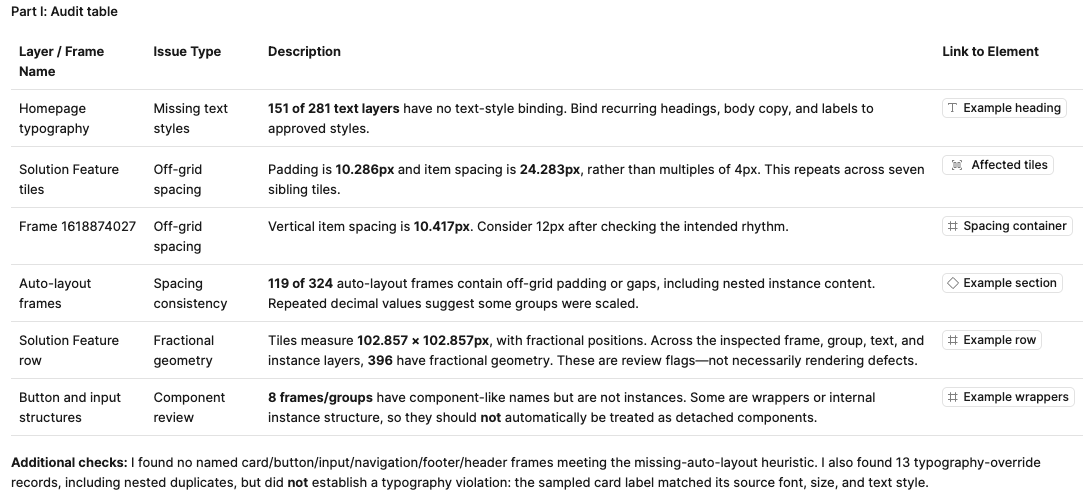
Most review processes happen too late, turning senior reviews into tedious copyediting and file-hygiene corrections. This system moves quality assurance upstream. The QA Tiller Design Review skill conducts a four-tier automated audit across the active canvas:
Typography & Hierarchy Integrity: Identifies unassigned type styles, incorrect line spacing, irregular font weights, and text-wrapping anomalies.
Brand Variable & Token Alignment: Detects detached color tokens, unmapped global variables, and inconsistent visual elements across responsive frames.
Spatial & Layout Consistency: Flags uneven padding, irregular margins, and misalignment against the underlying grid.
Functional & Content Completeness: Cross-checks content structures against approved assets, highlighting missing disclaimers, broken links, untested QR codes, and WCAG accessibility contrast concerns.
The tool serves as an intelligent co-pilot. It surfaces anomalies with precision, while leaving the designer in complete creative control to make the final informed judgment.
Engineering a Culture of Shared Ownership
The true strength of this initiative was how it was built. Instead of an executive directive, the rollout was executed as a collaborative team lab.
During our testing sprint, our entire creative pod—worked hands-on as active testers. We stress-tested the skill against live client deliverables, documented friction in our shared testing space, and gathered qualitative feedback from every contributor.
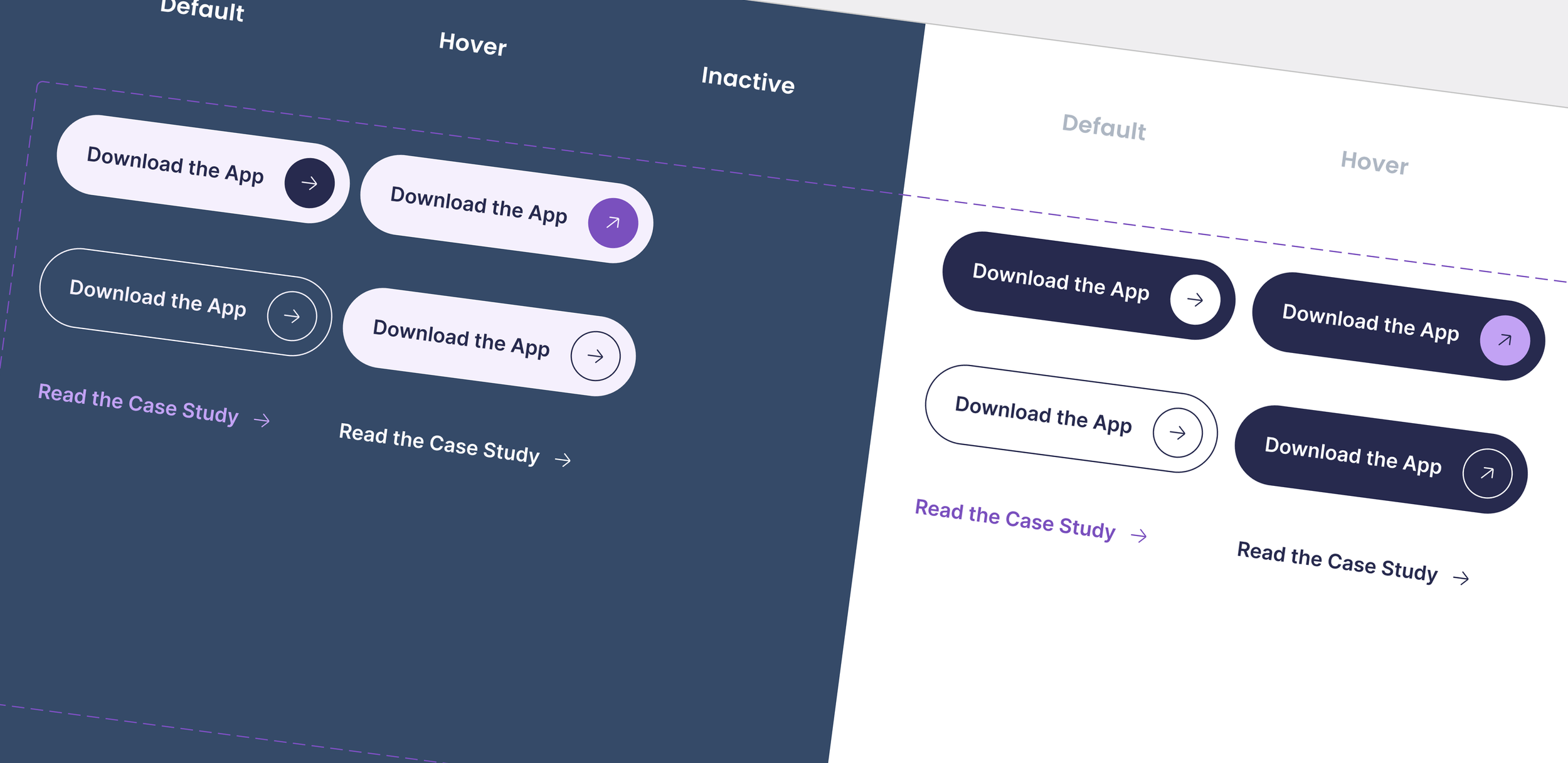
Early testing revealed that typography and spacing consistency required stricter sensitivity to be truly useful. Working together, we adjusted the algorithm’s focus, prioritizing layout rhythm and token governance. By engaging the team as co-creators, we removed the anxiety around file reviews and fostered high psychological safety, genuine curiosity, and shared pride in our collective output.
Results at Agency Scale
By embedding automated pre-flight checks into our daily delivery flow, we elevated quality consistency across the entire agency:
Unified Quality Baseline: Established one repeatable standard for every deliverable format—web platforms, presentations, digital marketing, and print.
Pre-Flight Defect Removal: Consistently flags detached brand variables, incorrect font scales, and spacing errors before internal reviews take place.
Zero Review Overhead: Integrated seamlessly inside native Figma files, eliminating external friction and keeping designers focused inside their creative environment.
Designing Ecosystems, Not Just Assets
Creative leadership today requires being an operational architect as much as a designer. In a high-velocity environment, protecting quality cannot depend on late-night catches or manual policing. It requires building systems that give people the confidence to do their best work.
By partnering with our team to co-design this QA engine, the goal was never to replace human discernment—it was to protect it. Automating the mechanical layers of file verification gave our designers their focus back, freeing time for strategic thinking, art direction, and polished visual execution. When technology absorbs operational friction, the entire team is empowered to perform at its highest level.